AAI 2026: 6th Gen AMD EPYC Server CPUs Power the Agentic Data Center
AMD EPYC 9006 Series server CPUs deliver purpose-built solutions for agentic AI, enterprise and HPC workloads.
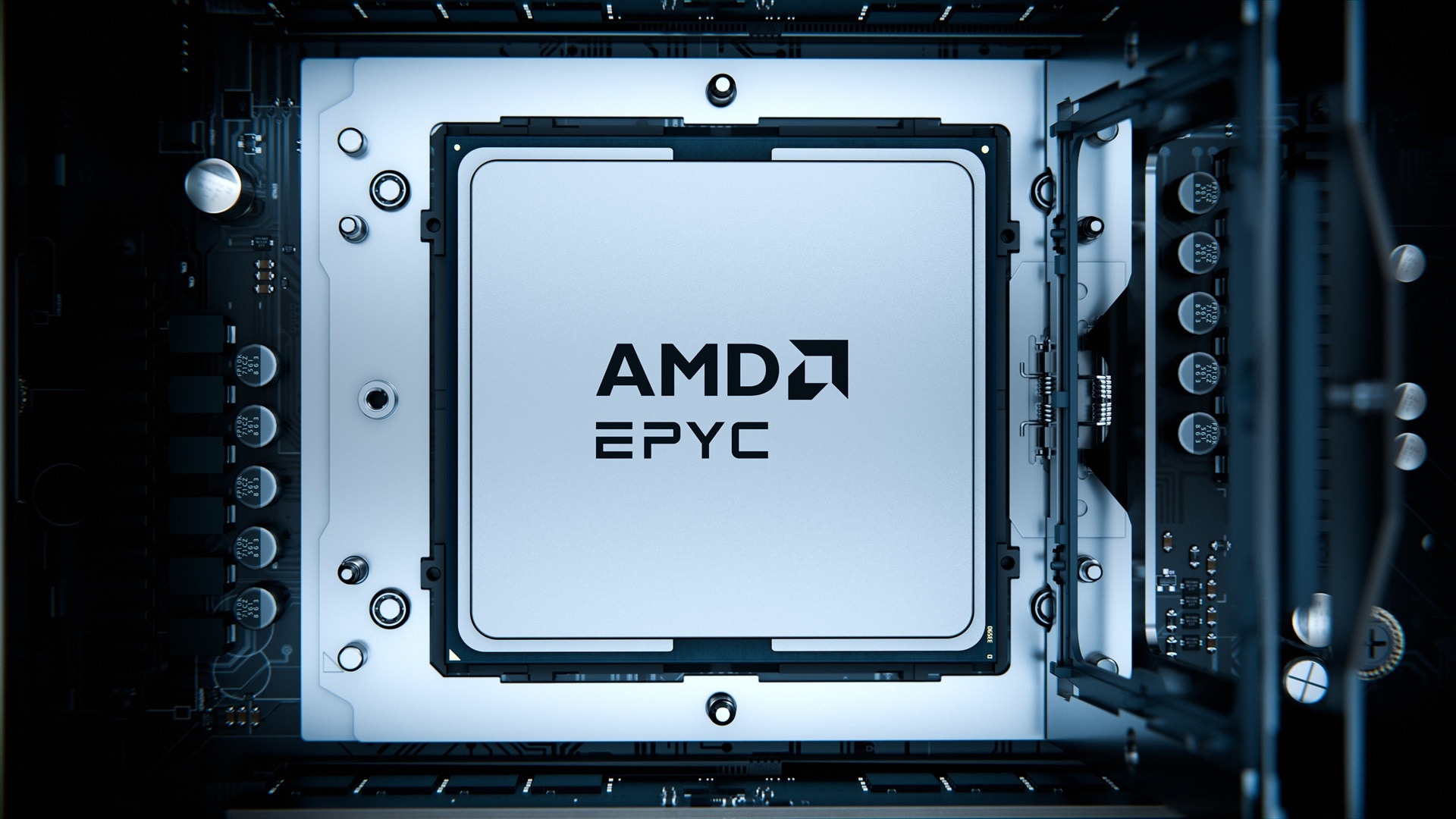
What’s the News? Highlighted at Advancing AI 2026, AMD EPYC™ 9006 Series server CPUs provide a workload-optimized portfolio of solutions for agentic AI, cloud, as well as general purpose and high-performance computing (HPC). For agentic AI, the family of processors addresses three CPU-dependent jobs in agentic workflows: running agents, feeding accelerators and powering the enterprise services agents use.
Why It Matters? Agentic AI is reshaping how enterprise infrastructure is used and designed. It is transforming AI from systems that simply answer questions into systems that act, plan, call tools, write and execute code, and reason over enterprise data. This shift demands significantly more compute than GPU acceleration alone. Agentic AI depends on CPU-powered infrastructure to run agents, coordinate work around the model, connect to enterprise data and services, and keep accelerators fed across increasingly complex AI systems. Matching the right CPU to each stage of the agentic workflow can improve throughput, utilization and efficiency across the data center.
What is the Role of AMD?
AMD EPYC processors have set the standard for leadership data center performance, efficiency and customer value, and with 6th Gen AMD EPYC™ server CPUs, that standard moves even higher. As agentic AI reshapes how enterprise infrastructure is designed and deployed, EPYC is evolving with our customers once again. 6th Gen AMD EPYC delivers workload-optimized compute for the full spectrum of modern data center needs; from running more agents and feeding GPUs across rack-scale AI infrastructure to powering the business-critical applications and services organizations rely on every day.
How is the Modern Data Center Changing? The shape of the data center is changing into a three-tier agentic architecture, with each tier creating distinct CPU demand. Three CPU jobs anchor the agentic workflow and modern enterprise infrastructure: agent sandbox execution, AI host nodes and general-purpose servers.
The agent sandbox CPU runs and coordinates agents, executes spawned code and tasks, manages memory and system state, and handles I/O outside the GPU. The AI host node CPU feeds GPUs across AI infrastructure like the AMD Helios™ rackscale solution. Lastly, the general-purpose CPU runs day-to-day business critical applications like databases, storage, application services and AI-support workloads.
What is the AMD EPYC 9006 Series? AMD EPYC 9006 Series server CPUs are the industry’s broadest server CPU portfolio for agentic AI built to match the right processor to the right job.1 The lineup includes purpose-built CPUs for running agents, feeding GPUs, powering enterprise workloads and accelerating HPC and technical computing.
AMD EPYC 9006 SP7: Built for high-density agent sandbox execution with up to 256 cores and 512 threads, it helps run more agents per watt, per dollar and per rack. In high-frequency configurations, it also serves as an AI host node, with up to 5GHz frequency, PCIe® Gen 6 and impressive CPU-to-GPU improvement delivering the most agents per watt, per dollar, and per rack.2 3 4
AMD EPYC 9006 SP8: The processor is built for efficient, right-sized performance across critical enterprise workloads and agent sandbox execution where efficiency is top priority. With flexible 8- to 128-core options and low-power designs, it supports everything from edge sites and power-constrained racks to smaller clusters and general-purpose servers engineered to deliver leadership performance per system dollar.
AMD EPYC 9006X SP7: The processor is built for HPC, technical computing and data-intensive workloads that benefit from high cache and memory bandwidth. With some variants reaching frequencies up to 5.15GHz frequencies and 3x the L3 cache per core of AMD EPYC™ 9006 SP7, it helps accelerate simulation, modeling, large-scale analytics, retrieval, in-memory analytics and other memory-sensitive work.
AMD EPYC 9006 LP: Formerly codenamed “Verano,” the AMD EPYC 9006 LP processor is purpose-built as an AI host node CPU for next-generation rack-scale AI systems. The processor, leveraging LPDDR memory and up to 5GHz frequency, helps keep accelerators fed across dense, accelerator-rich racks allowing system utilization to scale as deployments grow from single nodes to AI factories.
What’s the AMD Advantage? One architecture and multiple design points let customers compose the agentic data center to the work instead of stretching one CPU across every job. The portfolio shares a common software ecosystem and a hardened security foundation, giving customers the flexibility to choose density for agents, frequency and bandwidth for GPUs, high cache for technical workloads and efficiency for enterprise services.
More: Advancing AI 2026 (Press Kit)
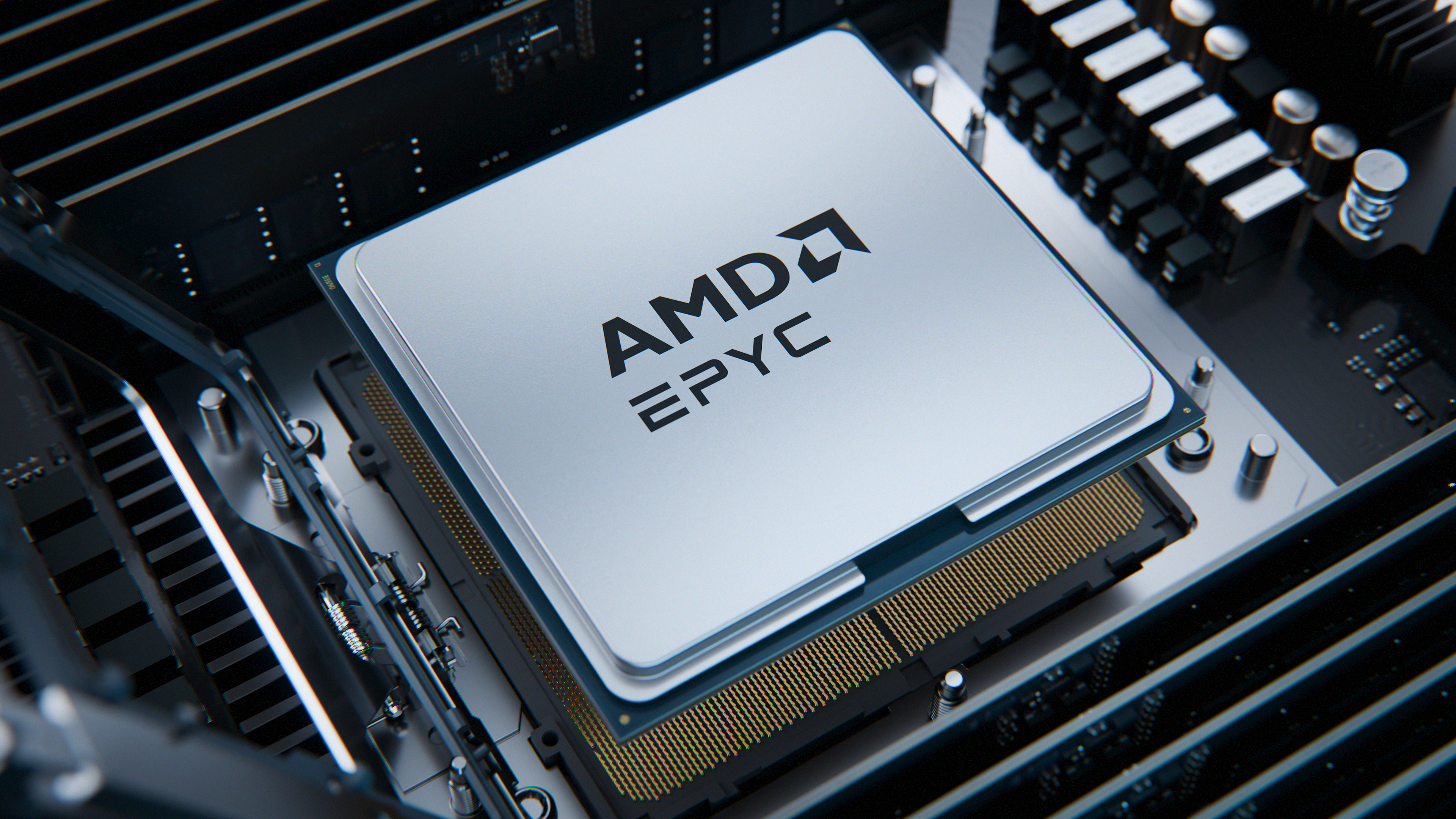
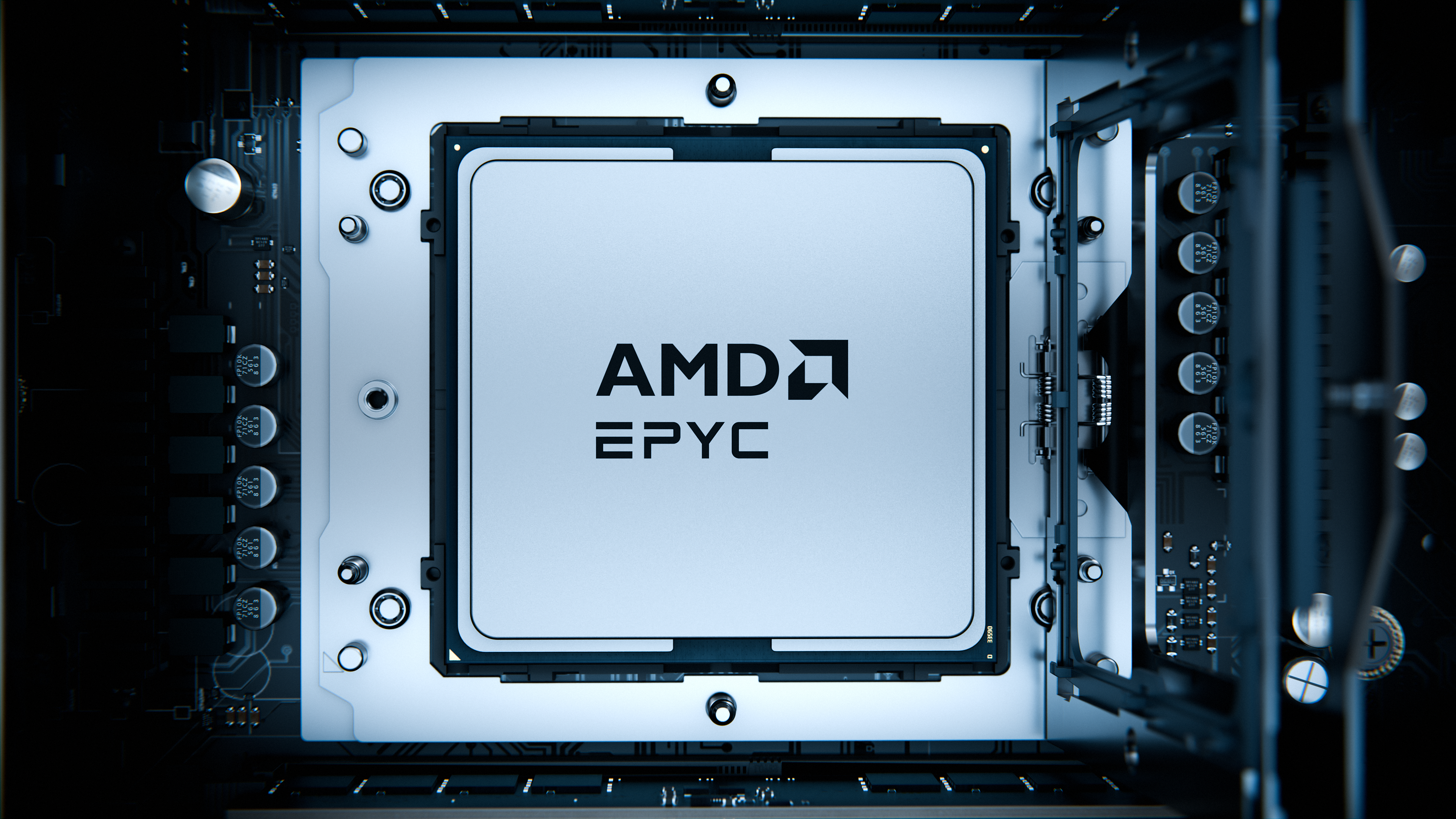
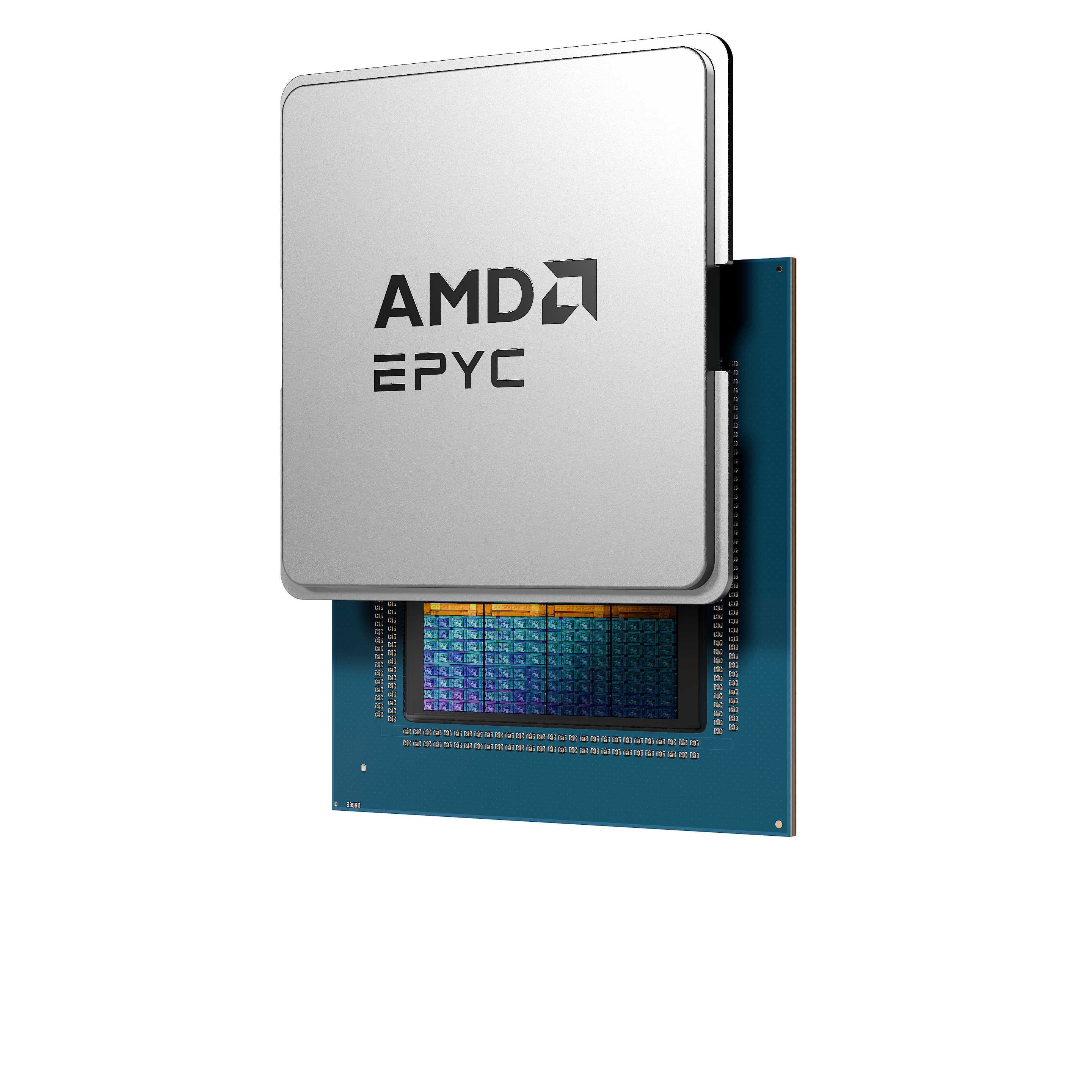
The AMD EPYC 9006 Series server CPUs is part of a portfolio of solutions for agentic AI, cloud, enterprise, high-performance and general-purpose computing. AMD highlighted their role powering the agentic data center at Advancing AI 2026. (Credit: AMD)
The AMD EPYC 9006 Series server CPUs is part of a portfolio of solutions for agentic AI, cloud, enterprise, high-performance and general-purpose computing. AMD highlighted their role powering the agentic data center at Advancing AI 2026. (Credit: AMD)
The AMD EPYC 9006 Series server CPUs is part of a portfolio of solutions for agentic AI, cloud, enterprise, high-performance and general-purpose computing. AMD highlighted their role powering the agentic data center at Advancing AI 2026. (Credit: AMD)
Cautionary Statement
This blog may contain forward-looking statements concerning Advanced Micro Devices, Inc. (AMD), which are made pursuant to the Safe Harbor provisions of the Private Securities Litigation Reform Act of 1995. Forward-looking statements are commonly identified by words such as "would," "may," "expects," "believes," "plans," "intends," "projects" and other terms with similar meaning. Investors are cautioned that any forward-looking statements in this blog are based on current beliefs, assumptions and expectations, speak only as of the date of this blog and involve risks and uncertainties that could cause actual results to differ materially from current expectations. Such statements are subject to certain known and unknown risks and uncertainties, many of which are difficult to predict and generally beyond AMD's control, that could cause actual results and other future events to differ materially from those expressed in, or implied or projected by, the forward-looking information and statements. Investors are urged to review in detail the risks and uncertainties in AMD’s Securities and Exchange Commission filings, including but not limited to AMD’s most recent reports on Forms 10-K and 10-Q.
AMD does not assume, and hereby disclaims, any obligation to update forward-looking statements made in this blog, except as may be required by law.
-
EPYC-068 - The AMD EPYC server CPU portfolio spans the industry’s broadest ranges of data center deployments, from general-purpose enterprise, cloud, telecom, SMB, and HPC systems to emerging AI environments including sandboxed agentic AI deployments and GPU head node servers. AMD EPYC 6th Generation platforms extend this breadth by uniquely combining high core and thread density of up to 512 threads, advanced memory bandwidth of up to 16 channels of 12.8 GT/s MRDIMM support, next-generation PCIe® Gen 6 connectivity, and select SKUs with boost frequencies up to 5 GHz.
-
9xx6-014: Comparison based on published Top-of-stack core counts and CPU W, Default CPU Power for 6th Gen EPYC, and TDPs for 5th Gen EPYC, Intel® Xeon®, and Nvidia Vera for estimated Highest Agents / CPU W across AMD EPYC™ 9956 (400W Default CPU Power), AMD EPYC™ 9965 (500W TDP), Nvidia Vera (450W TDP), ARM AGI (300W TDP), and Intel® Xeon® 6980P (500W TDP) powered servers as of 7/22/2026. 2 threads per core (SMT). 1 thread per core for ARM AGI.
Starting with the 6th Gen AMD EPYC™ server processor family, AMD uses Default CPU Power to describe processor power consumption, succeeding AMD's historical TDP reference. Default CPU Power reflects total power consumed across the processor's compute and I/O dies for the stated performance target. Default CPU Power and TDP may both serve as processor power references for product comparison, platform planning, and performance-per-watt analysis. Intel Xeon TDP from ark.intel.com. Nvidia Vera TDP from https://developer.nvidia.com/blog/nvidia-vera-cpu-sets-a-new-standard-for-agentic-workloads-in-ai-factories/. ARM AGI Specifications from https://www.arm.com/products/cloud-datacenter/arm-agi-cpu#Specifications
-
9xx6-013: Comparison based on published Top-of-stack core counts and 1Ku pricing for estimated highest Agents / CPU $ and threads / CPU $ AMD EPYC™ 9006 (512 threads), AMD EPYC™ 9005 (384 threads), and Intel® Xeon® 6 (256 threads) SKUs as of 7/22/2026. Threads derived as 2 threads per core (SMT). Intel and Xeon are trademarks of Intel Corporation or its subsidiaries. Source: https://www.amd.com/content/dam/amd/en/documents/solutions/ai/methodology-description.pdf
-
9xx6-012: Based on estimated performance data for Nvidia, Intel®, and AMD EPYC™ Server Processors for Agentic AI, the AMD EPYC9996 provides the most agents per rack at a 100Kw power envelope per rack.
Compared to the cores per rack of Nvidia Vera (88c) powered server racks:
The AMD EPYC 9996 (256C) provides 2.08x the cores (and threads with SMT) per rack
The AMD EPYC 9965 (192C) provides 1.86x the cores (and threads with SMT) per rack
The Intel Xeon 6980P (128C) provides 1.24x the cores (and threads with SMT) per rack
Source: https://www.amd.com/content/dam/amd/en/documents/solutions/ai/methodology-description.pdf
Press inquiries: corporate.pressinquiry@amd.com
More from this category
 Press KitData Center
AMD at CES 2026 Press Kit
AMD at CES 2026 Press Kit
 Data Center
Gartner Names AMD the Current Company to Beat in the Gartner® AI Vendor Race: AMD Is the Company to Beat for Enterprise AI Server CPUs
In its report, “AI Vendor Race: AMD Is the Company to Beat for Enterprise AI Server CPUs,” Gartner positions AMD as the current front-runner for enterprise AI server CPUs.
 Data Center
AMD Powers 4 of 10 Most Powerful Supercomputers, Advancing Global HPC and AI Leadership
AMD EPYC CPUs and AMD Instinct GPUs power leading systems across the latest TOP500 and Green500 rankings, delivering the performance and efficiency required for advanced scientific computing and AI.
 Data Center
AMD, Rackspace Technology Sign Definitive Agreement to Deploy 30 MW of AMD AI Compute
Collaboration establishes a new category of governed enterprise AI infrastructure purpose-built for regulated and sovereign environments.